Life-course processes
as cause and effect
of macro-level changes
in gun violence


Charles C. Lanfear University of Cambridge
Robert J. Sampson Harvard University

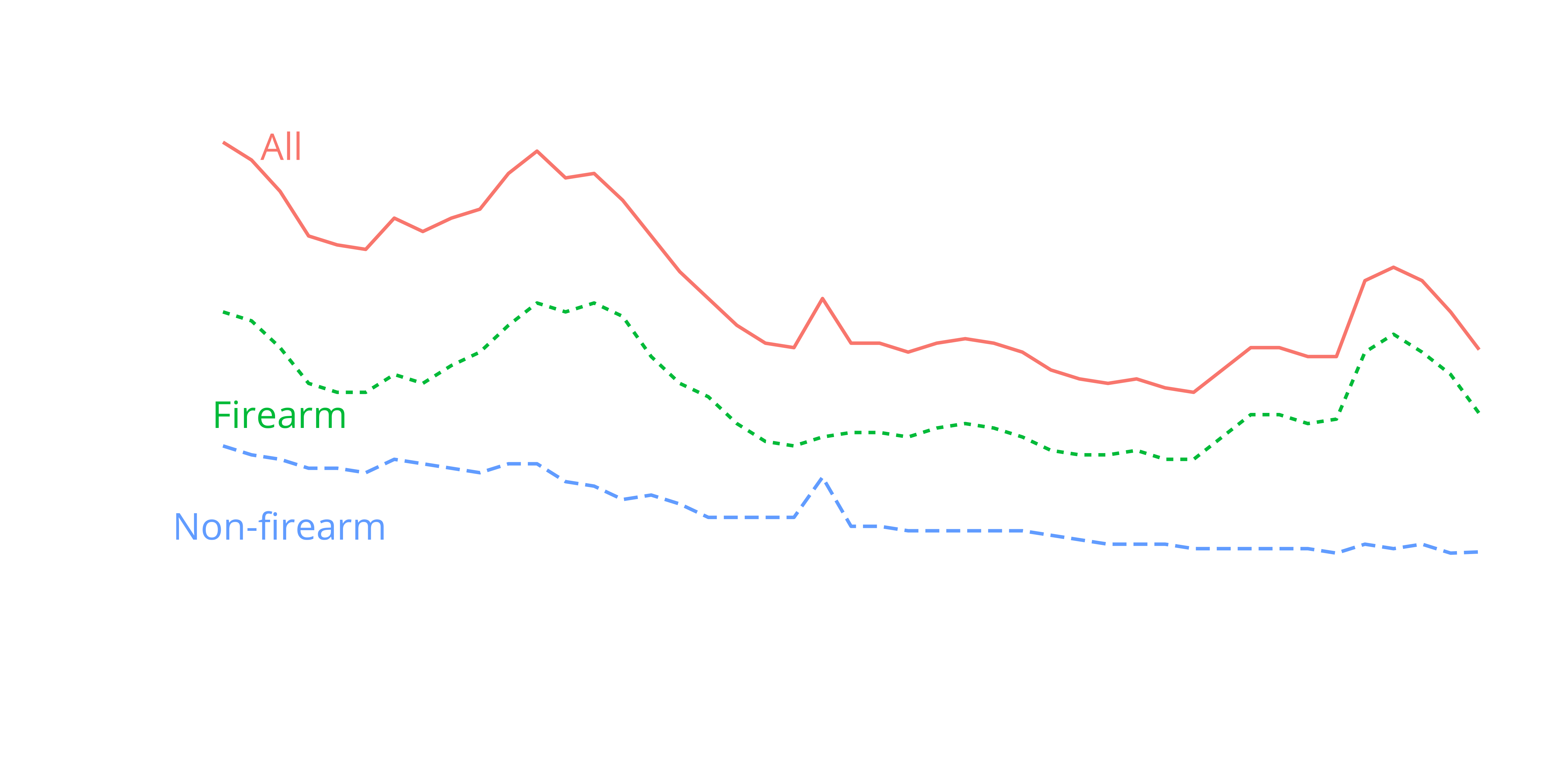
Homicide in the US

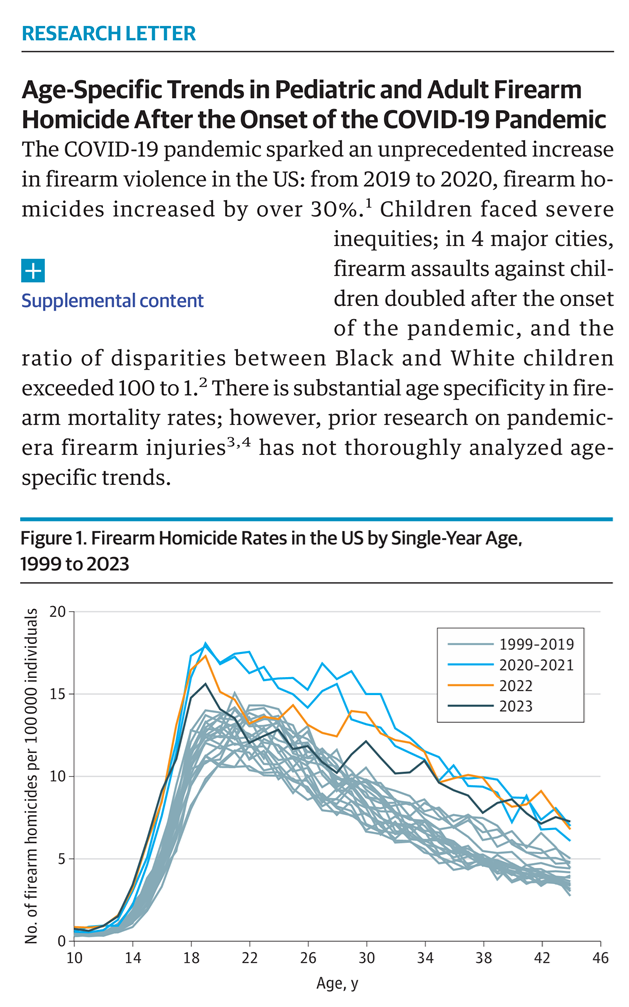
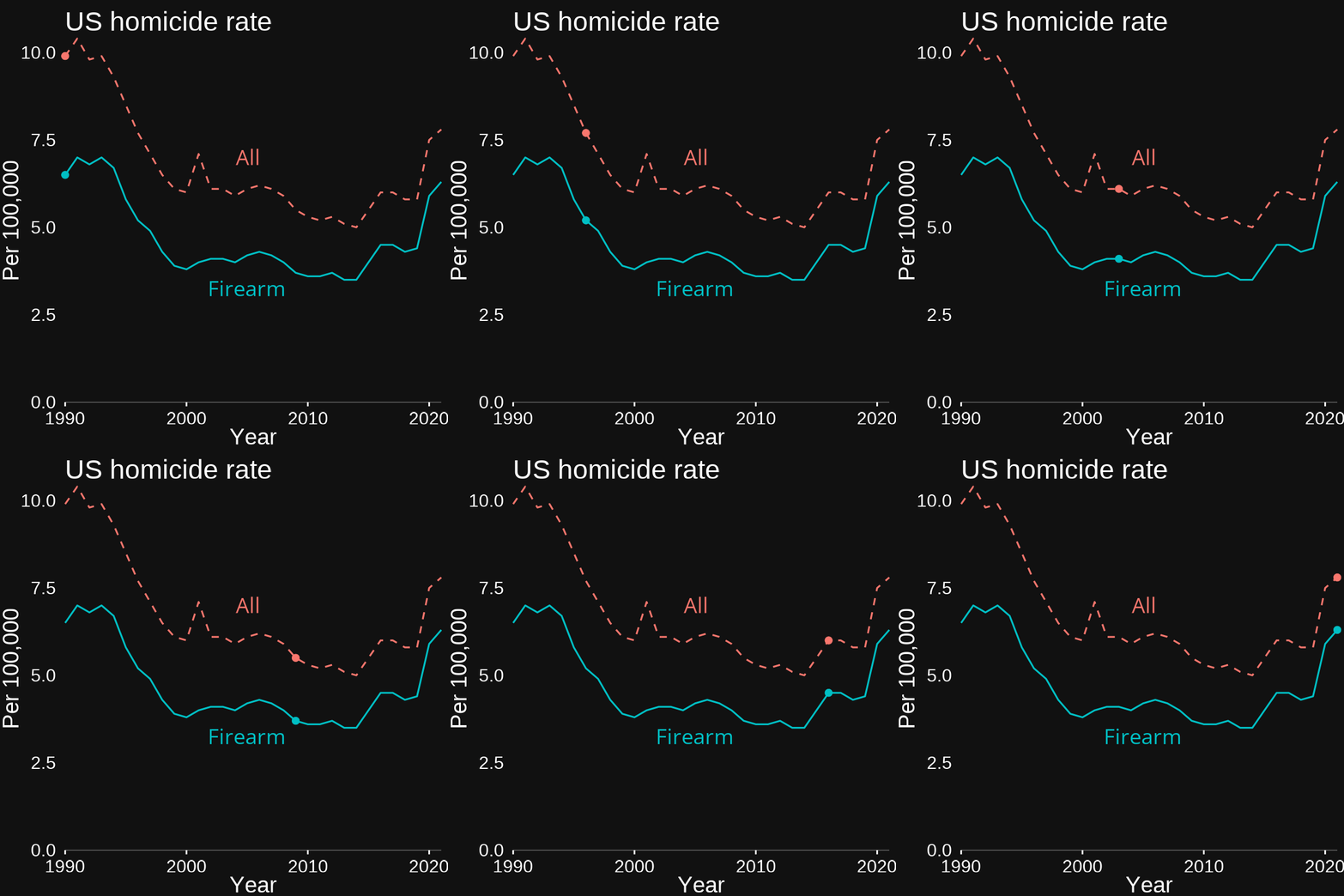
Peaked in 1990s and 2020-2021 and increasingly involves guns

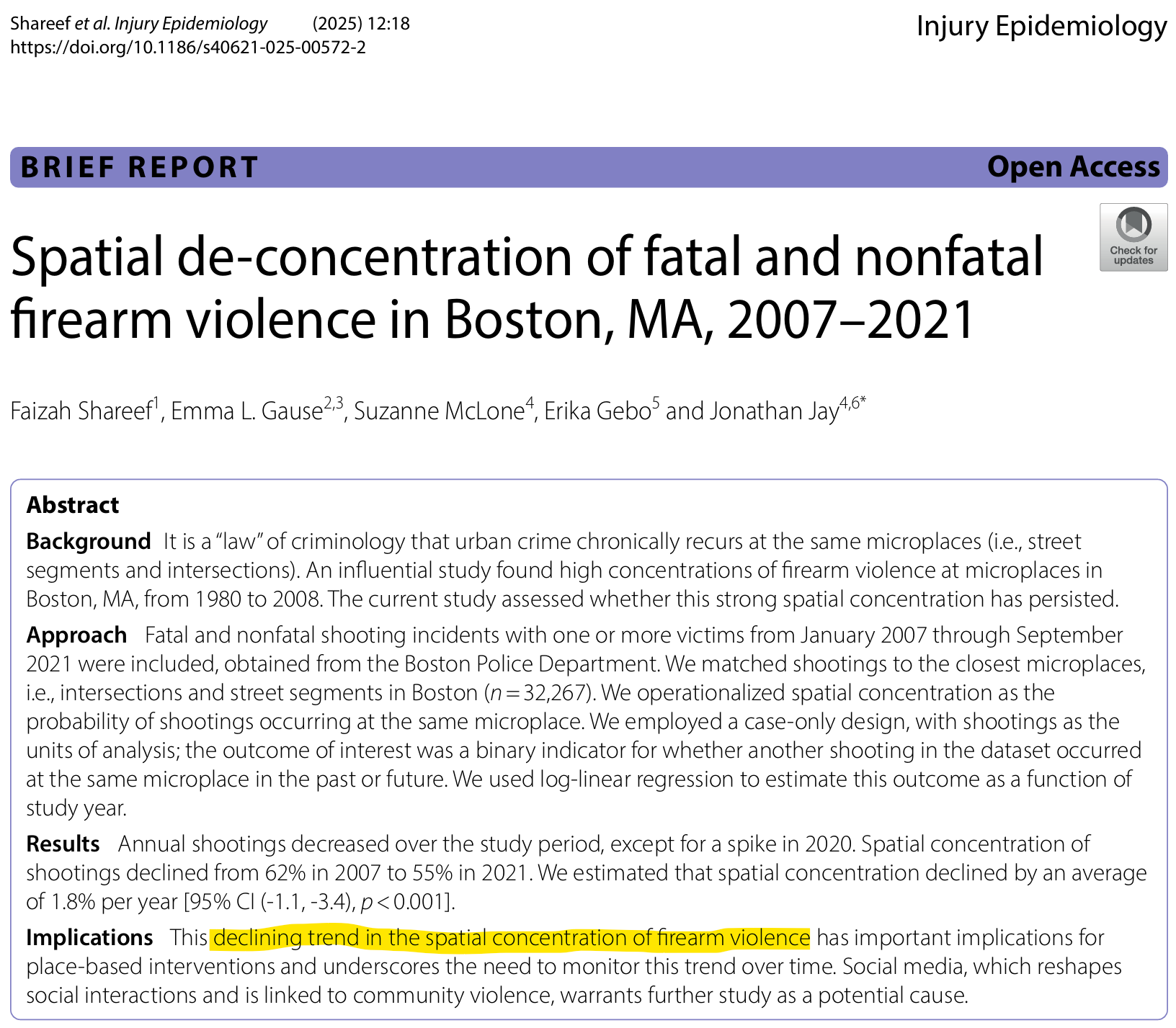
Homicide in Chicago
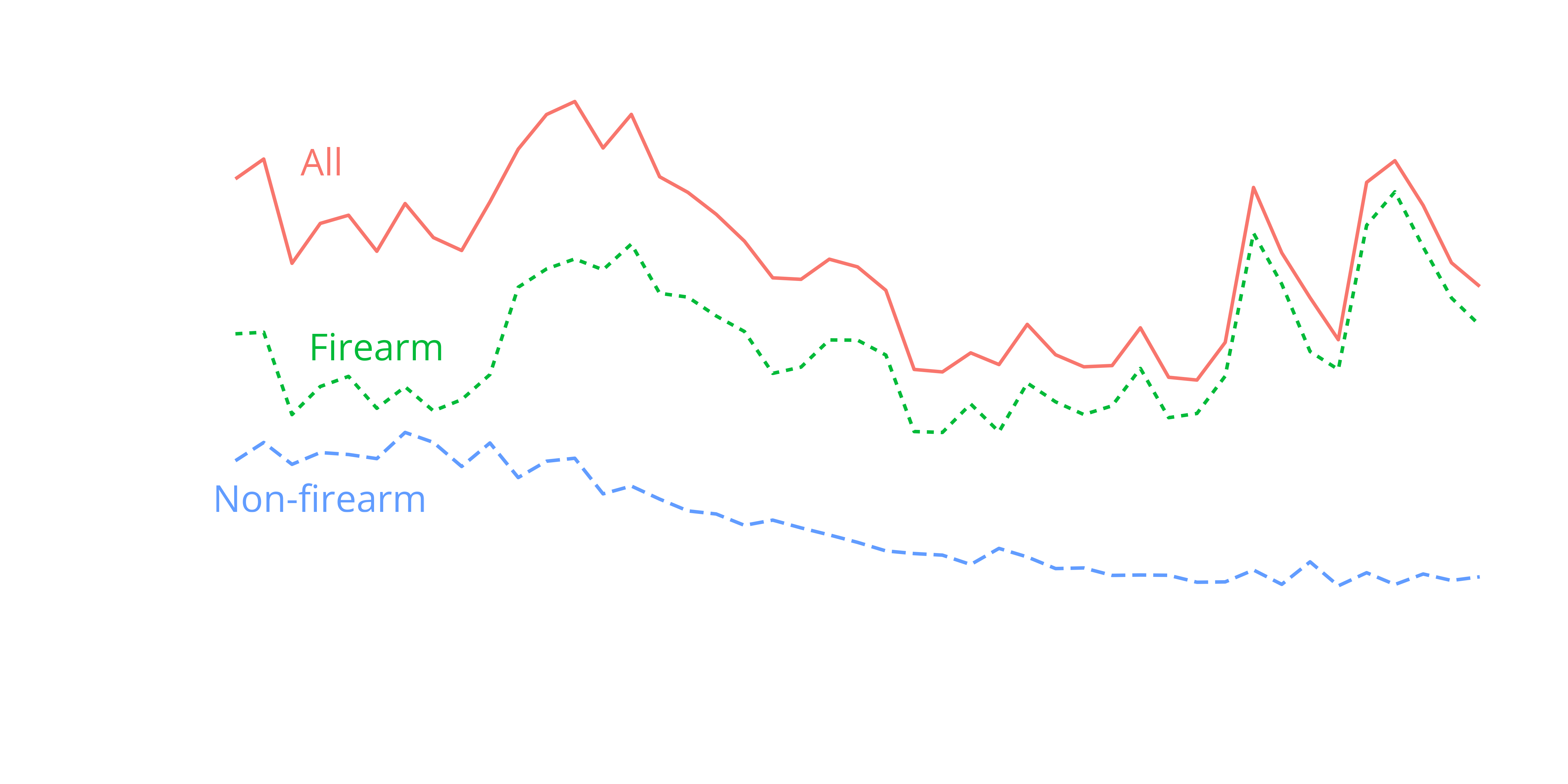
Exaggerated in cities like Chicago, Philadelphia, Dallas

Homicide in similar systems
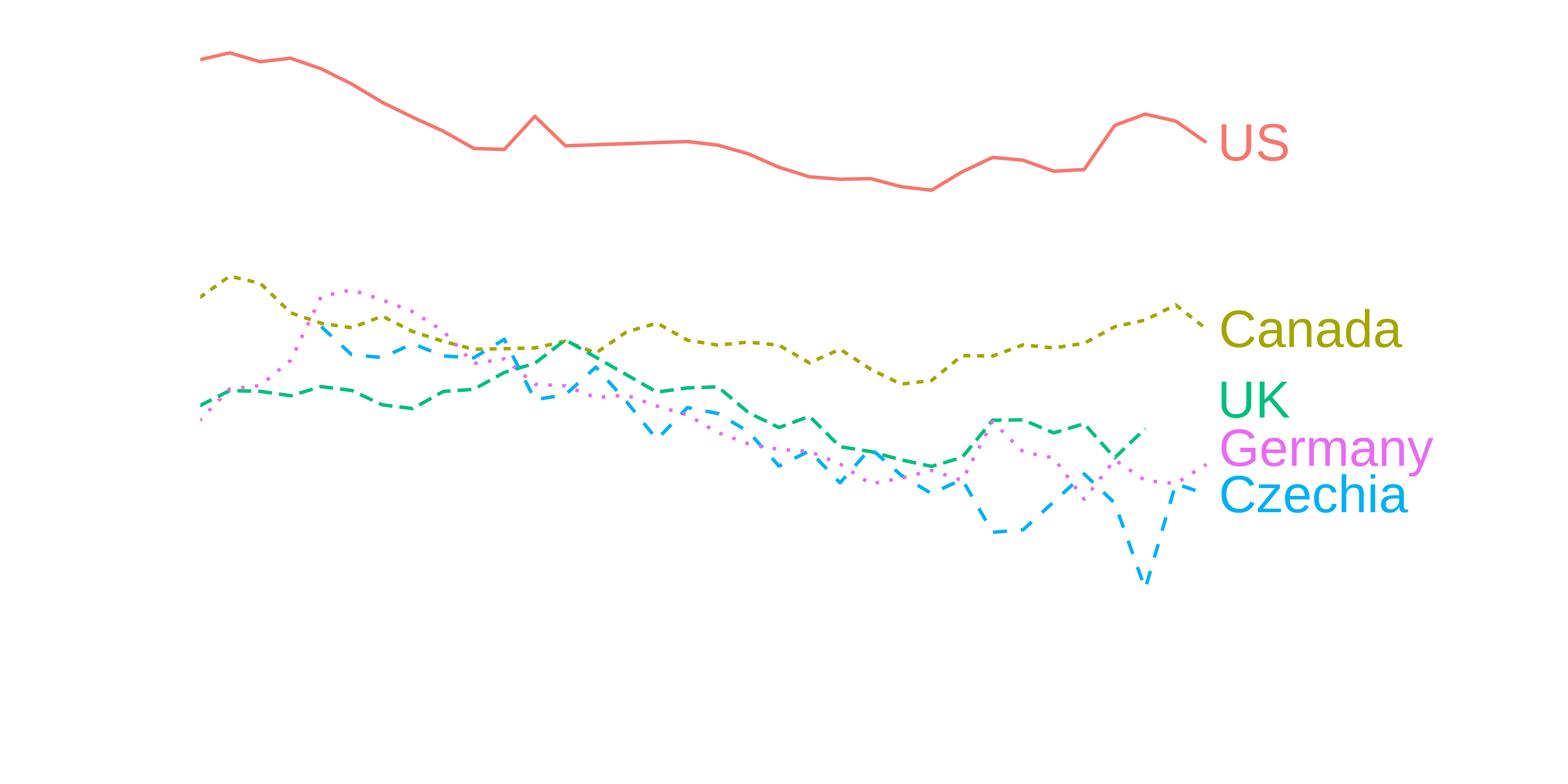
Drastically higher than our (even armed) peers

Homicide high violence countries
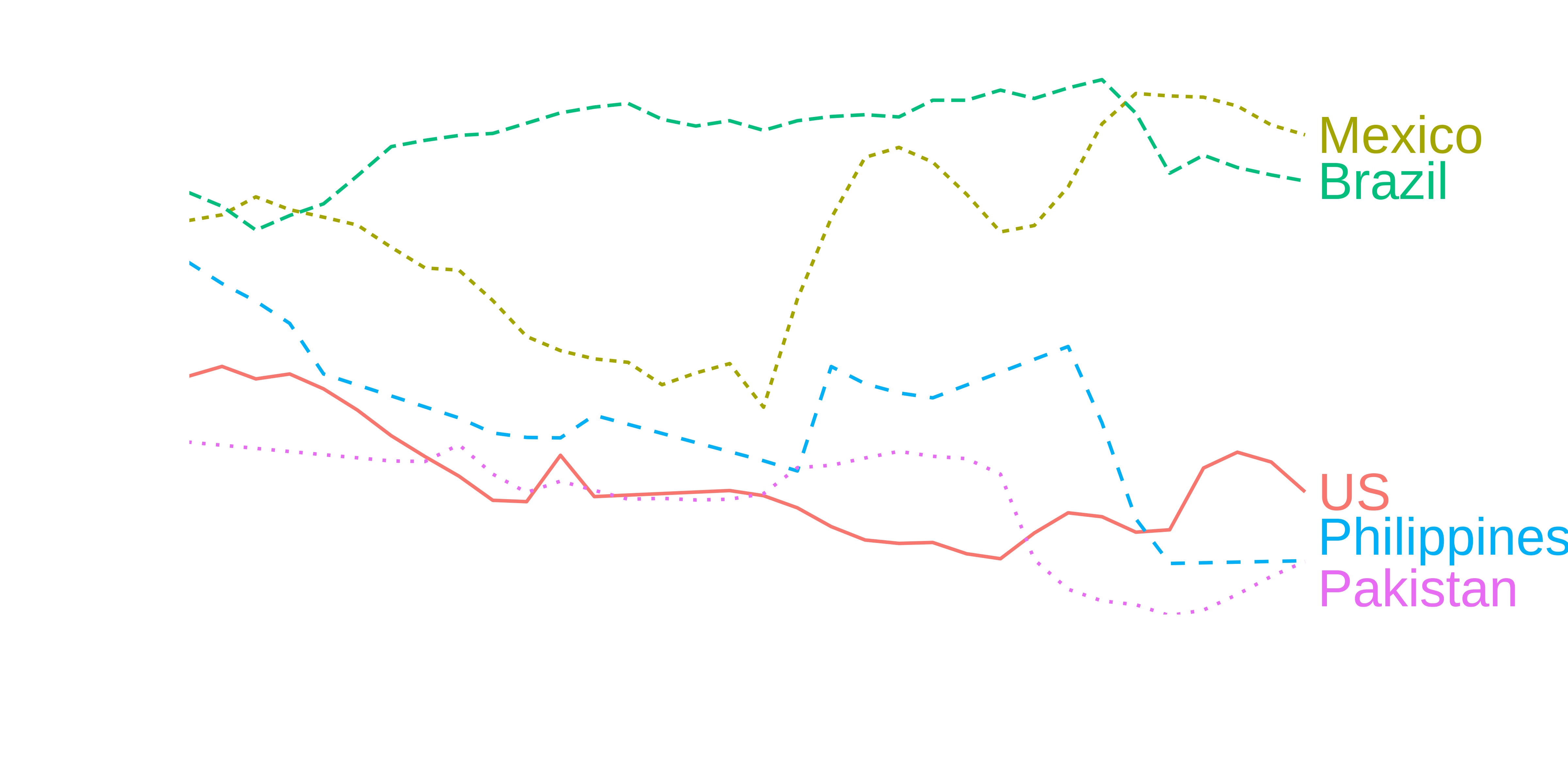
Temporal trends unlike high violence nations

Questions


How have these changes in gun violence translated into personal exposure to gun violence?


How are these changes related to individuals’ gun behaviors?


How are gun behaviors driving these changes in violence?

The

Project on Human Development in Chicago Neighborhoods

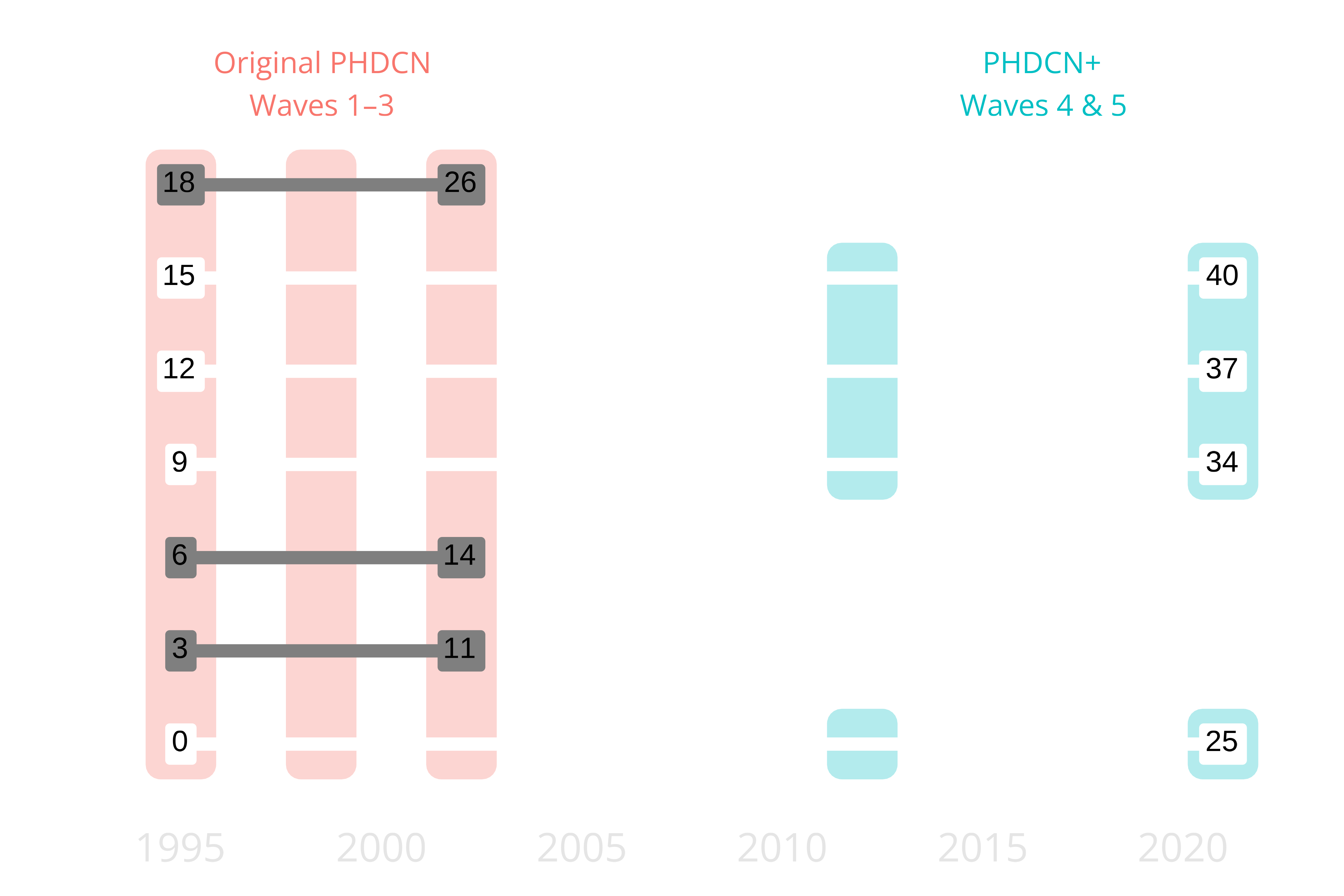
  • 6200 children from 7 age cohorts, born 1978 to 1996
  • 3 interviews from 1995–2003
  • Representative of Chicago and its neighborhoods

Project on Human Development in Chicago Neighborhoods

  • 6200 children from 7 age cohorts, born 1978 to 1996
  • 3 interviews from 1995–2003
  • Representative of Chicago and its neighborhoods

PHDCN+

  • 60% subsample of 4 cohorts
  • 1057 interviewed in 2012
  • 682 followed-up in 2021
  • Followed throughout the US

Funded by:

Timeline
Recent work

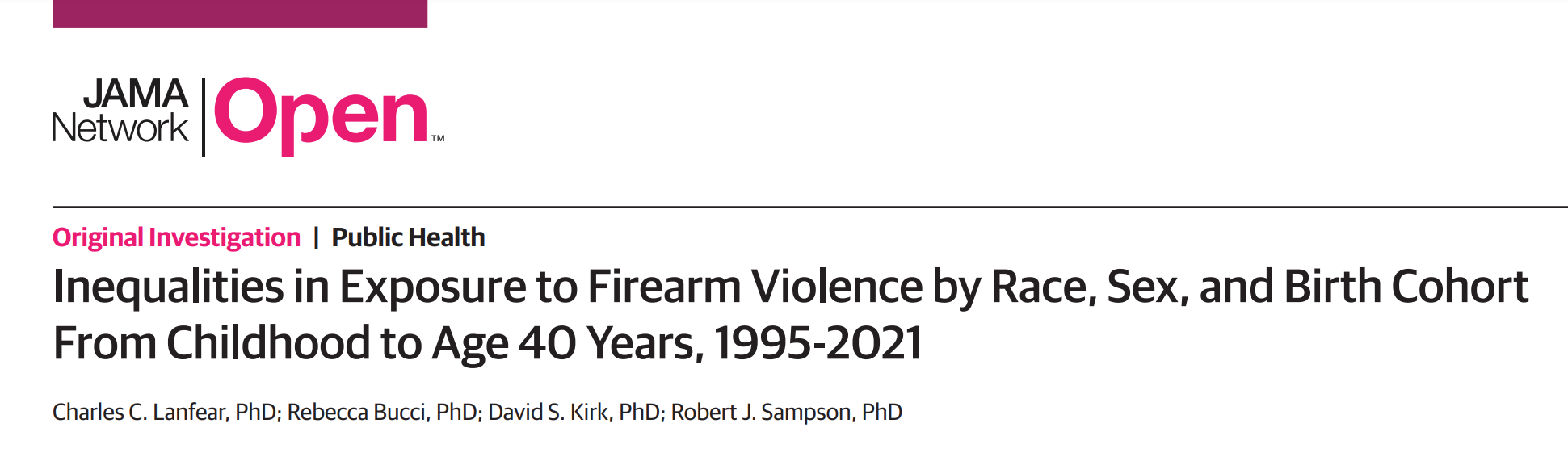
  • Adolescent exposure high in early 1990s, low afterward
  • Adult exposure low until 2016-2021
  • Black and Hispanic males at highest risk

Question: What drove these large swings in violence and exposure?

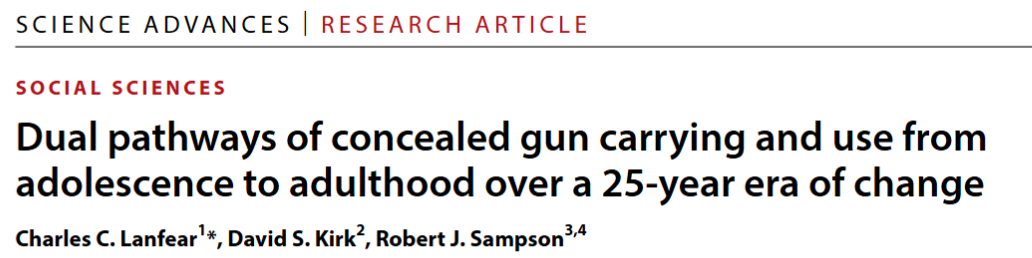
  • One key proximal cause: gun carrying

Adolescent-onset

  • \(\frac{1}{3}\) of those ever carrying
  • Most age out
  • Associated with immediate dangerous contexts
    • High risk of use

Adult-onset

  • \(\frac{2}{3}\) of those ever carrying
  • Most still carrying today
  • Associated with insecurity and diffuse threats
    • Low but cumulative use risk

How does this relate to macro-level changes in gun violence?

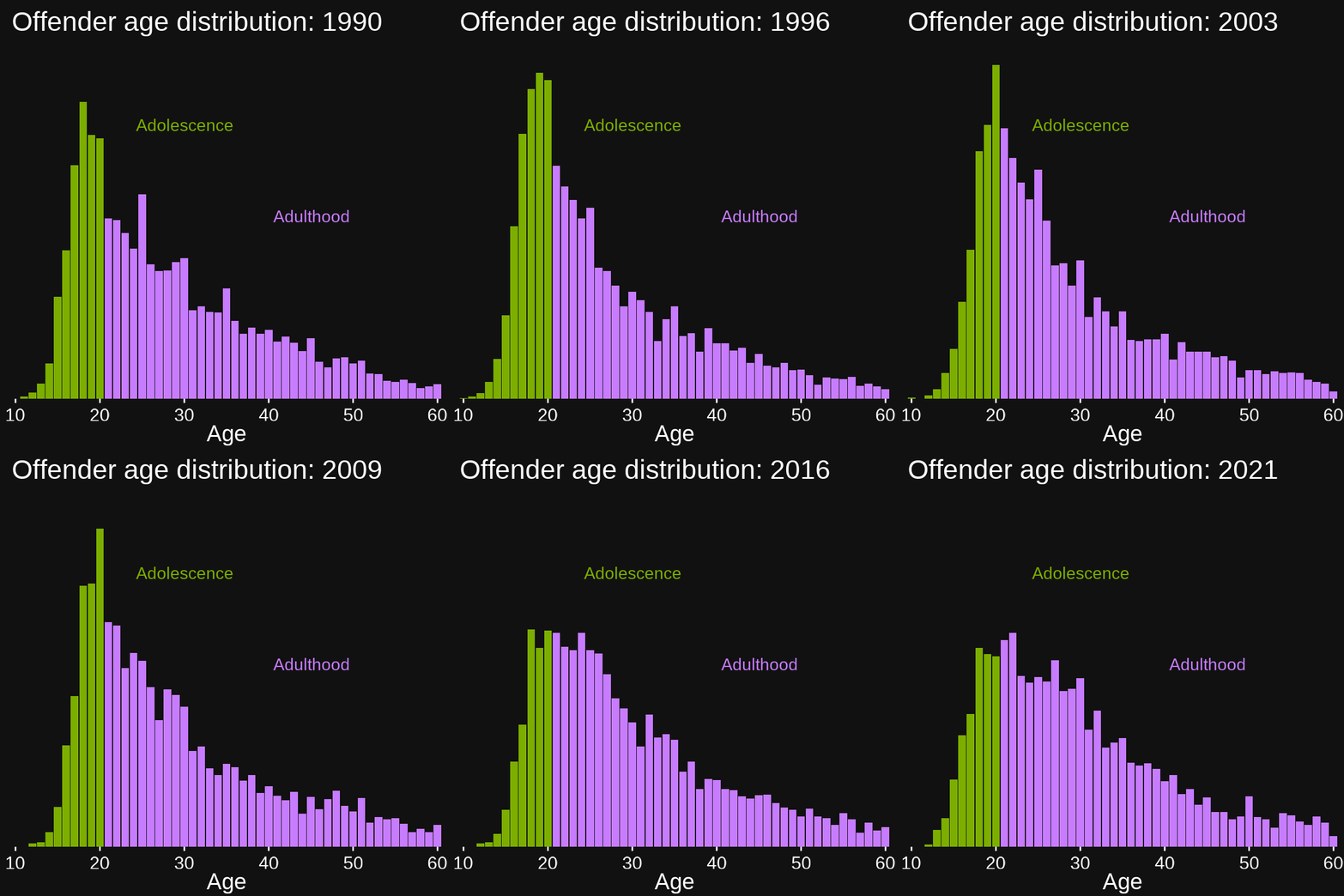
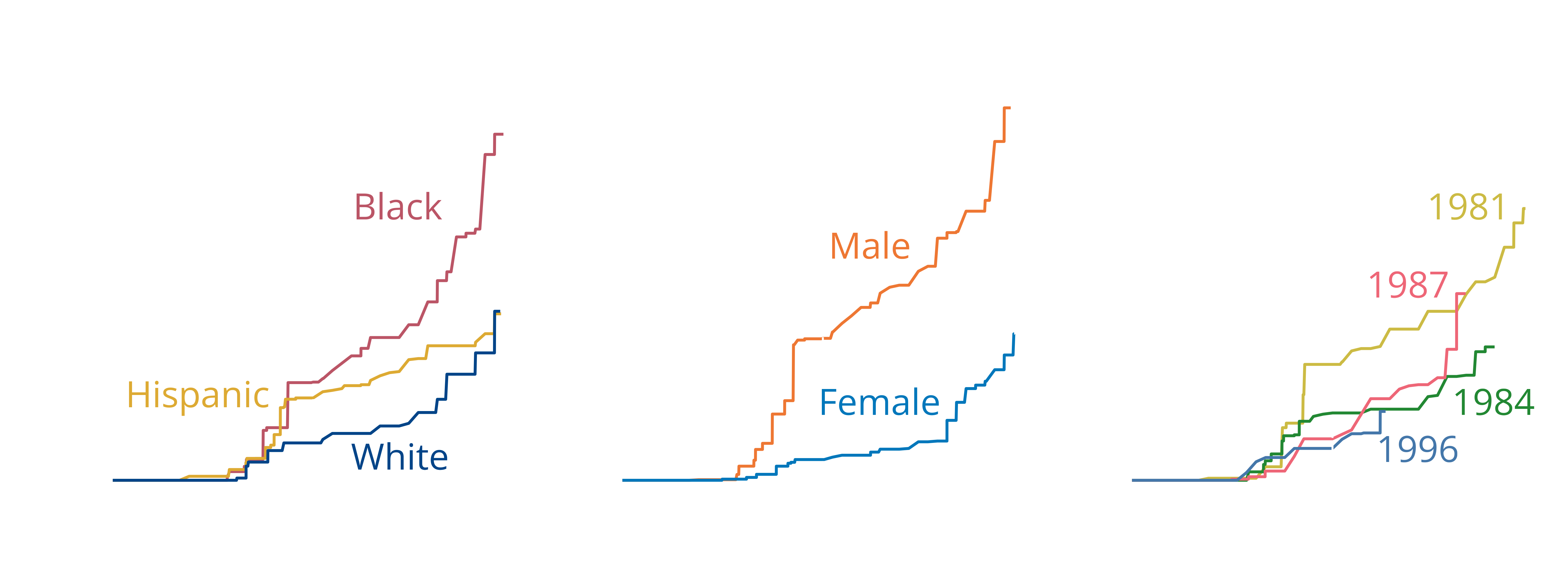
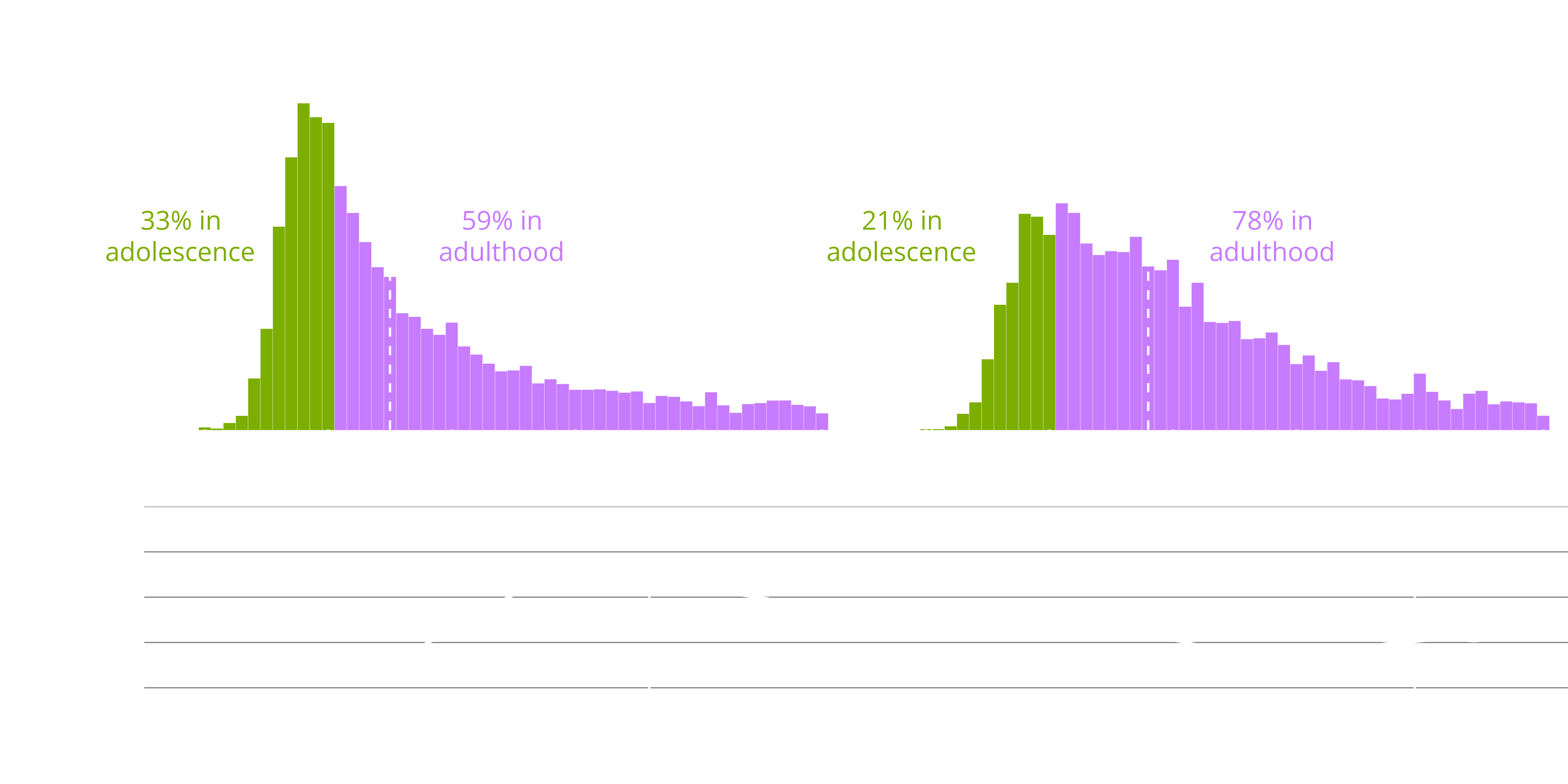
Changing age distribution of homicide
Age of handgun homicide offenders
Homicide victimization by sex
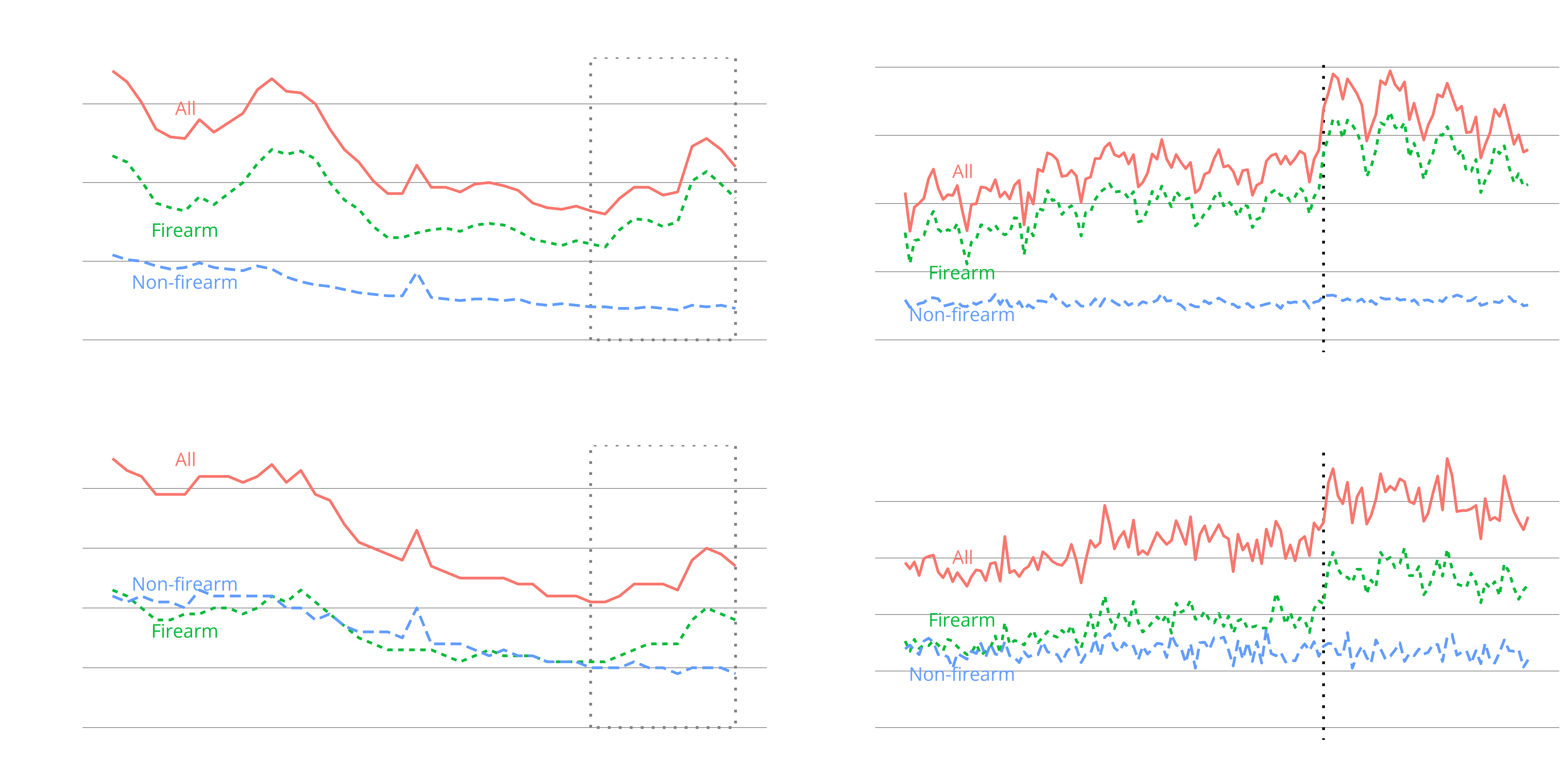
Homicide victimization by race
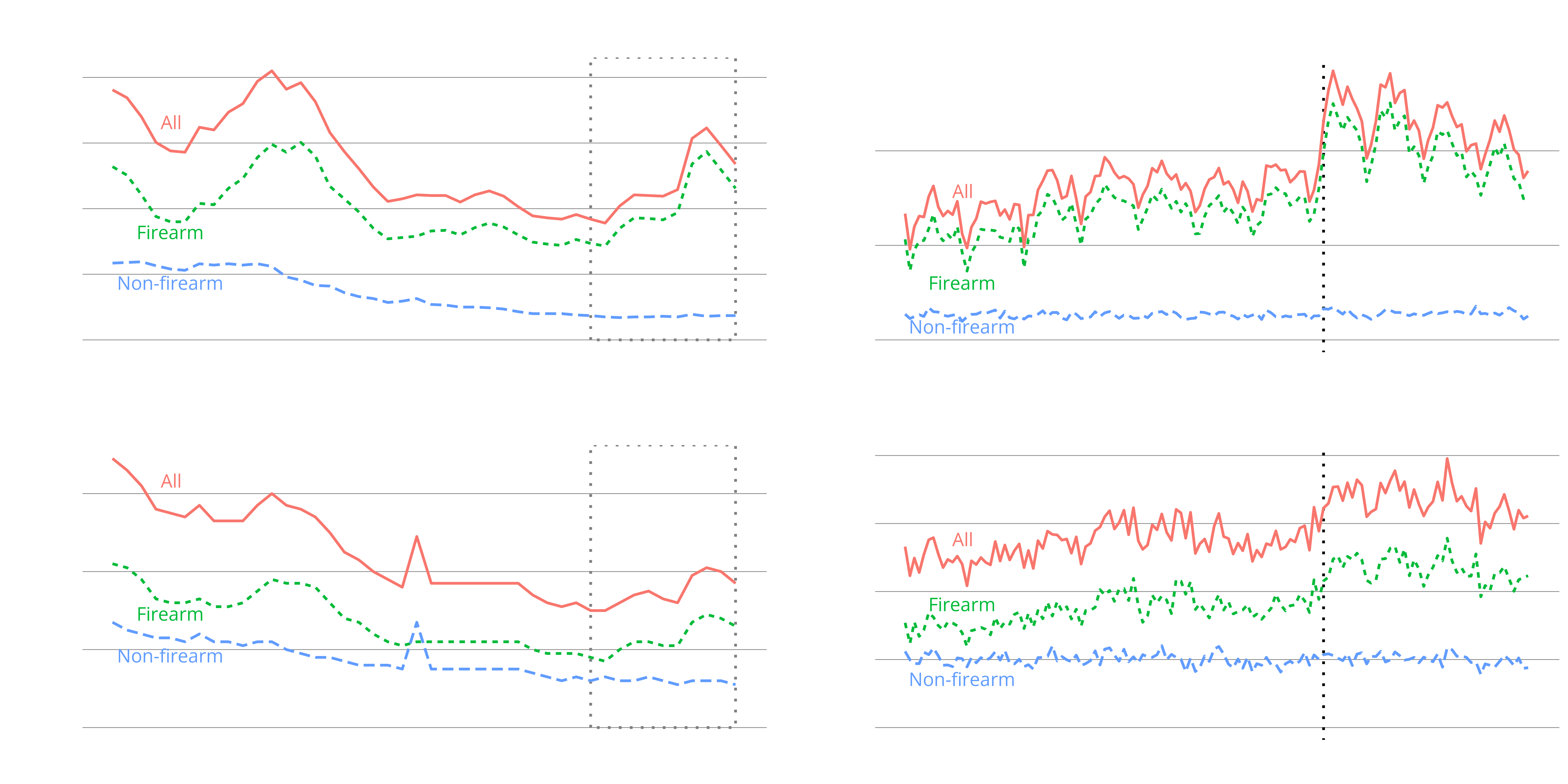
Two similar periods of high gun violence, except…

Early 1990s

  • Concentrated in adolescence
  • Slow accumulation:
    • Urban decline, rising incarceration, etc.
  • Context: Concentrated disadvantage, gangs, and illicit markets


2016-2021

  • Concentrated in adulthood
  • Rapid destabilization:
    • Trump, Ferguson, COVID-19, Floyd, etc.
  • Context: Widespread insecurity, loss of faith in institutions

Both: Legal cynicism and distrust

[a] normative conception of legal cynicism as a state in which the (legal) rules of society are no longer seen as binding within a community: “Normlessness and powerlessness tend also to go hand in hand, breeding cynicism about the rules of the society and their application”.
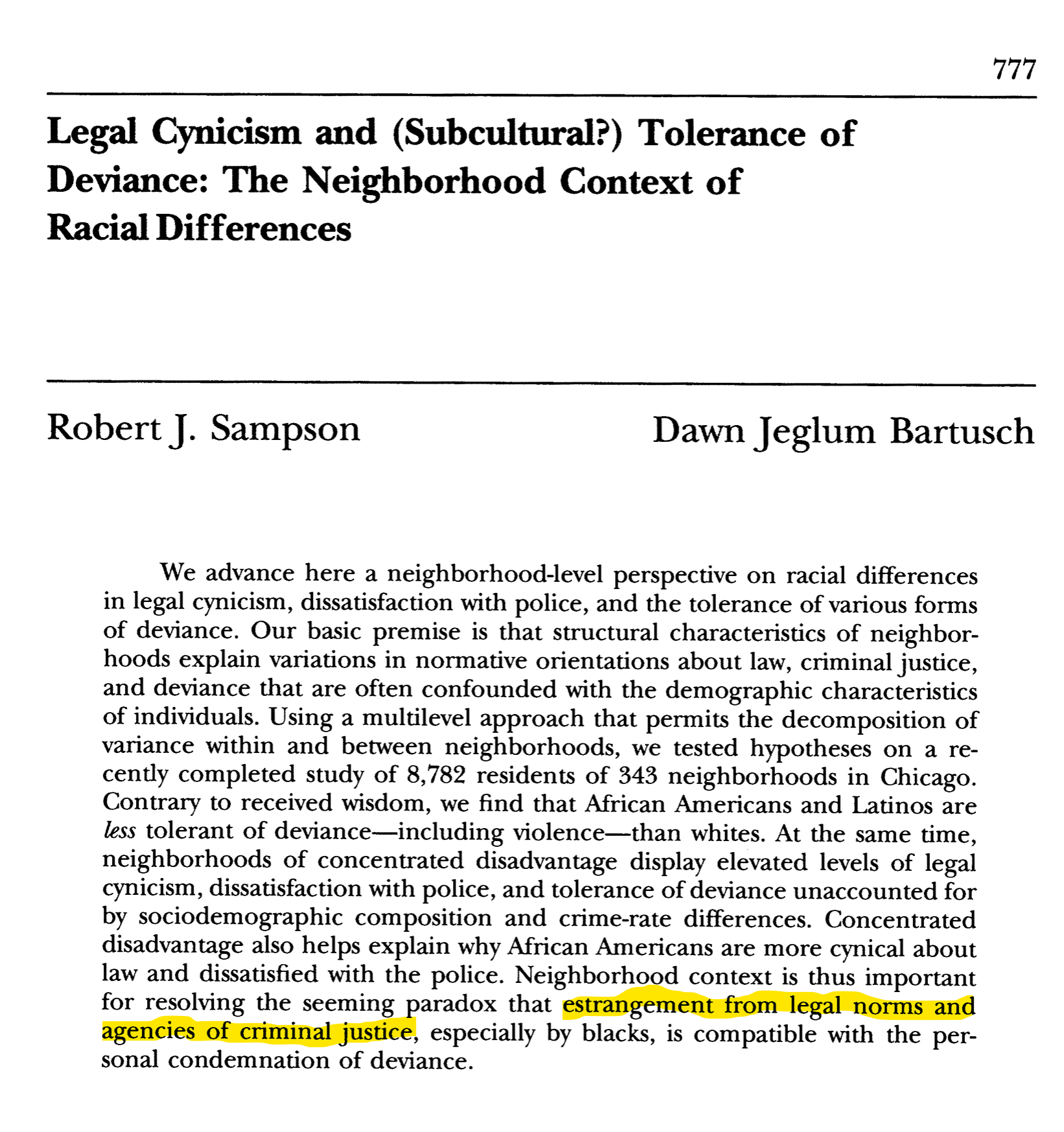
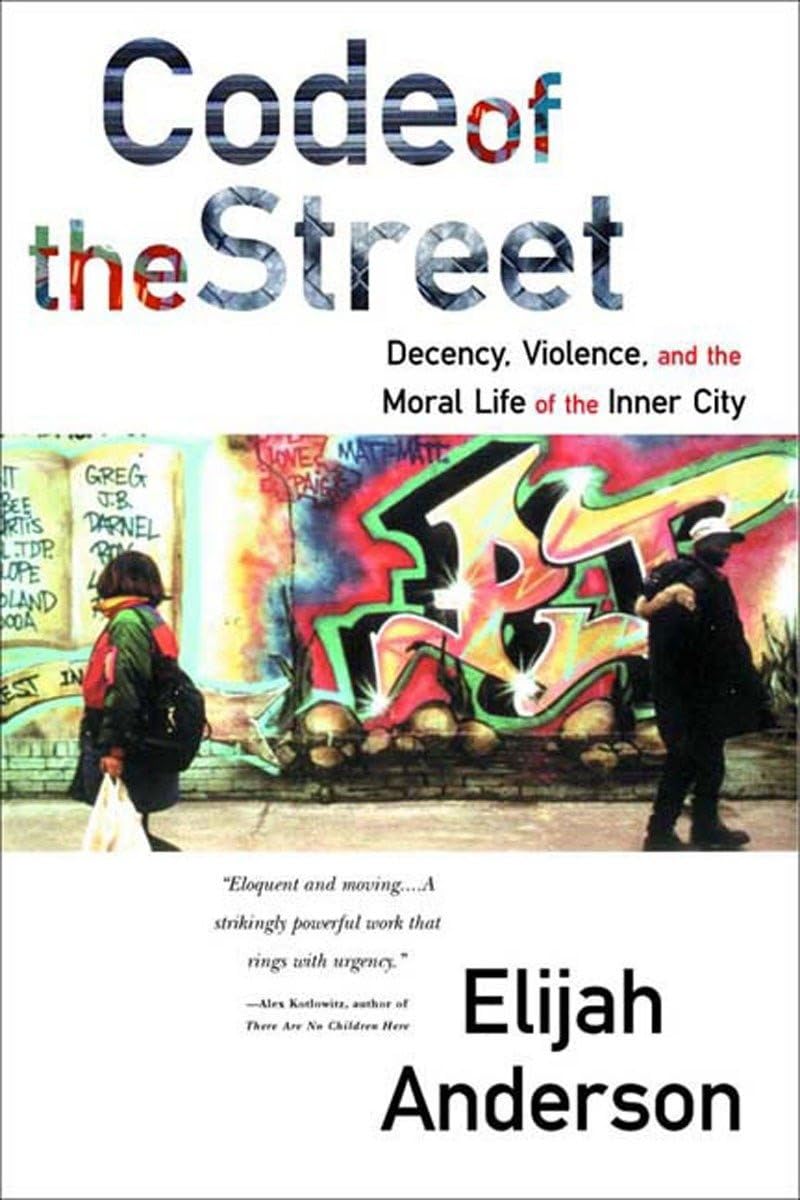
The inclination to violence springs from the circumstances of life… The code of the street is actually a cultural adaptation to a profound lack of faith in the police and the judicial system

Guns also:

  • Confer status
  • Deter threats
  • Facilitate dominance

Concentrated disadvantage → alienation from institutions

a cultural frame in which people perceive the law as illegitimate, unresponsive, and ill equipped to ensure public safety.

when calling the police is not a viable option to remedy one’s problems—individuals may instead resolve their grievances by their own means
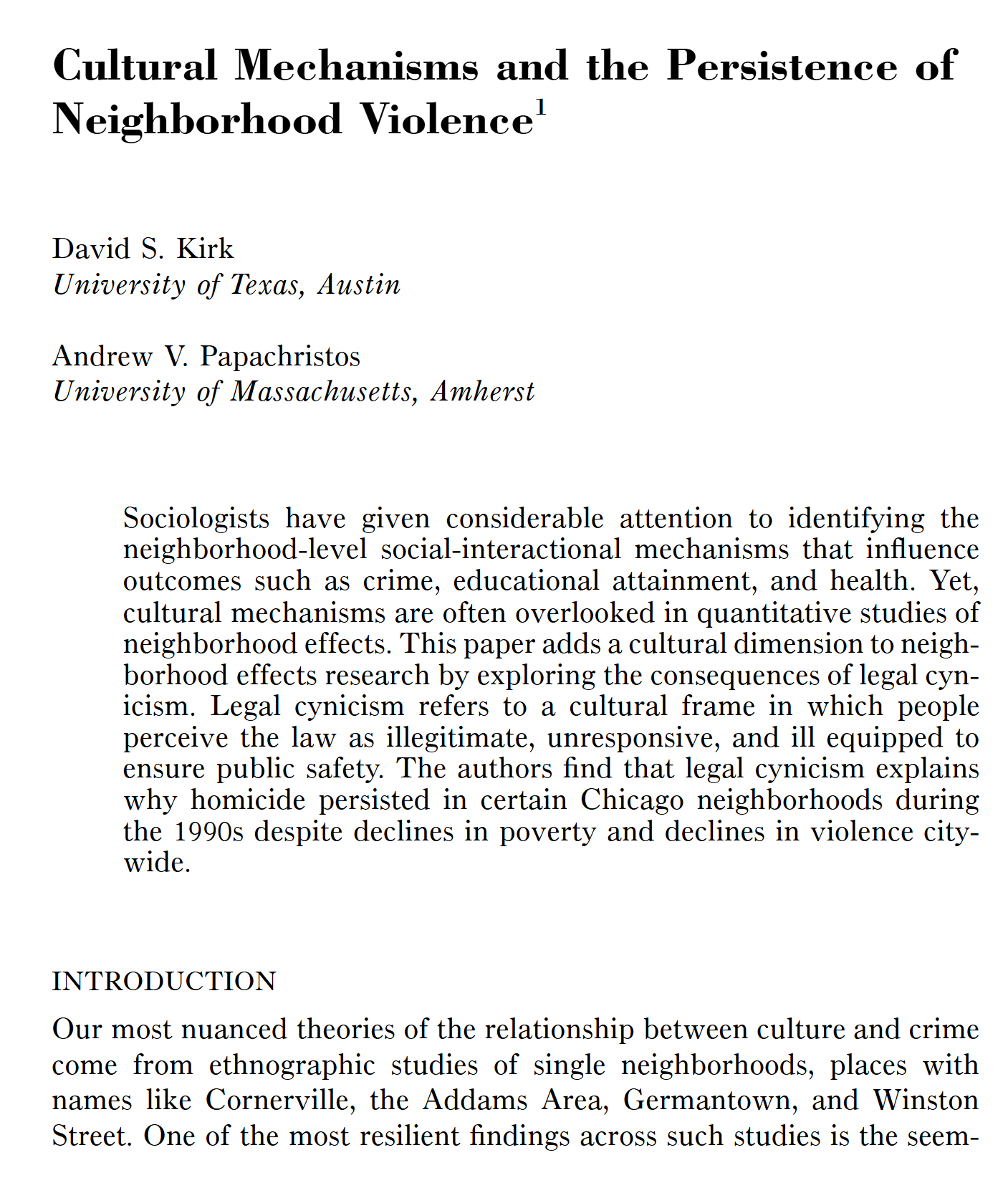
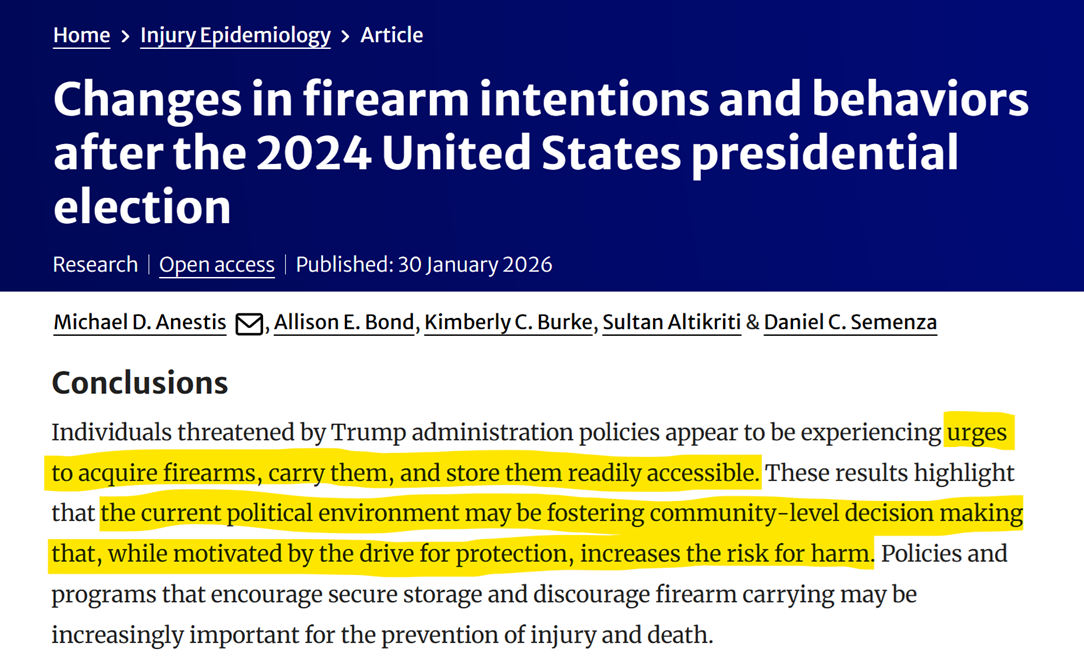
… two racially differentiated beliefs promote legal gun carrying: The belief common among most carriers that police are inadequate protectors—and thus one may carry a gun as protection from crime—and the belief more common among non-white carriers that police are coercive violators of rights—and thus one may carry a gun as protection from and resistance to the oppressive state (Lanfear et al. 2024)
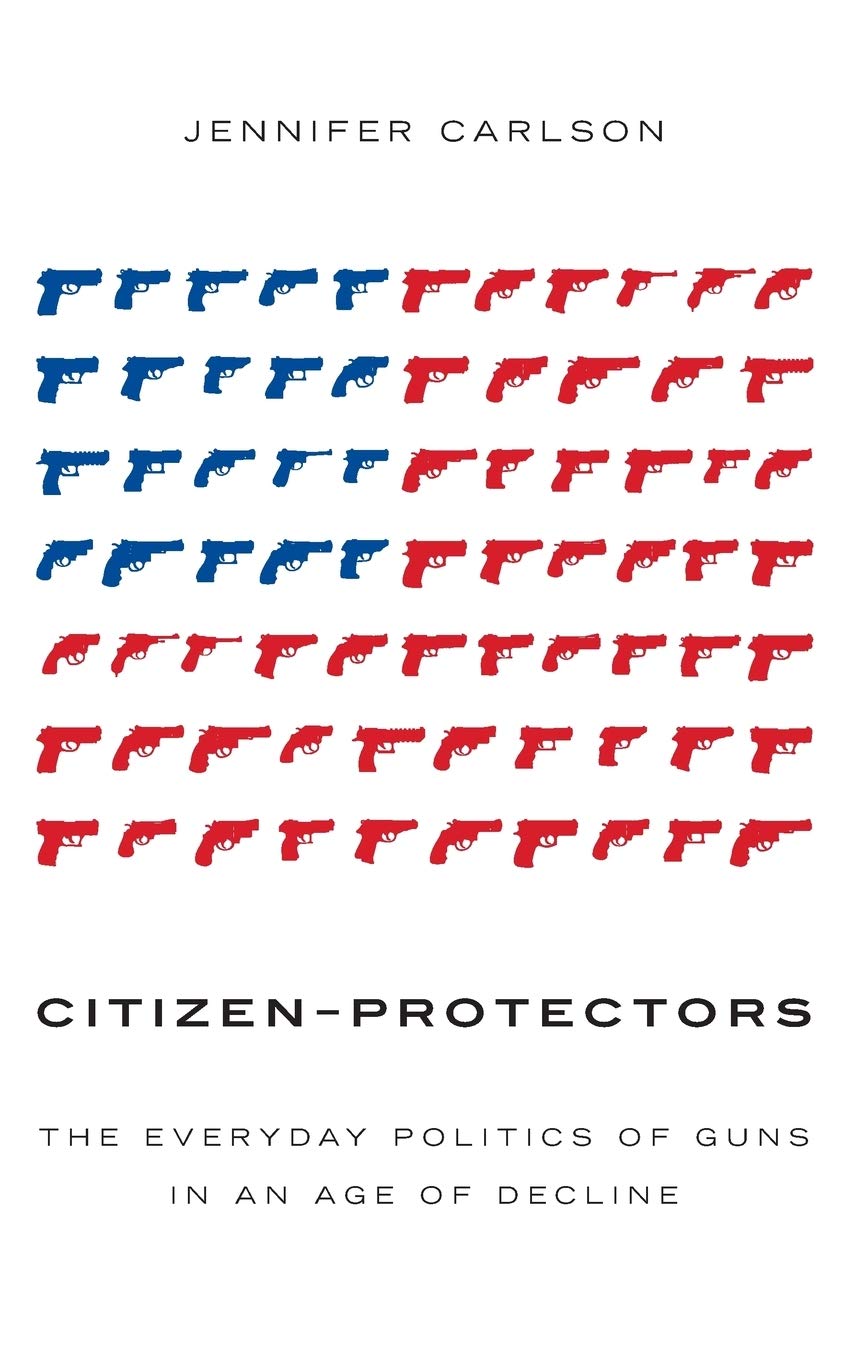
Linked to diffuse social and economic insecurities
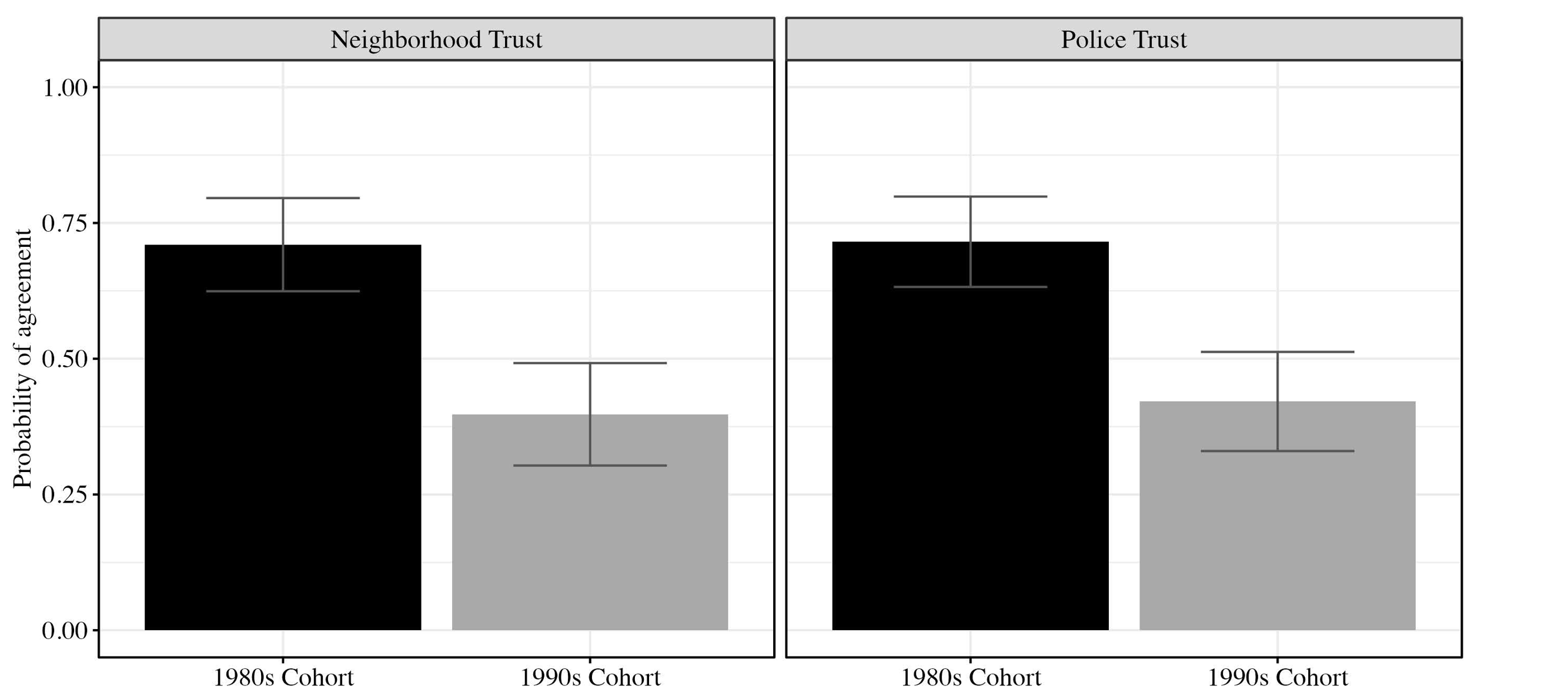
Despite having much higher arrest rates, the cohort born in 1987 has greater levels of trust in police and neighbors at age twenty-five than counterparts born just nine years later, adjusting for background factors and early-life conditions (Sampson 2026)
Stroebe et al. (2017) find protective gun ownership is primarily driven by “the belief that the world is a dangerous and unstable place, populated by bad people, and that society is at the brink of collapse.”

Low trust… may increase the likelihood of interpreting others’ actions as intentional and offensive, a key antecedent of interpersonal conflict and homicide (Luckenbill 1977; Ludwig 2025).

Cynicism, distrust, and guns

legal cynicism promotes concealed gun carrying as a response to perceived insecurity.

legal cynicism in the 1990s was primarily a neighborhood phenomenon because the factors producing it were local to neighborhoods; in contrast… legal cynicism of the mid-2010s onward is rooted in macrosocial changes

These changes were shaped by a structural legal context forged in distinctly American gun culture.

How does life-course variation in carrying impact rates of violence?

Dual process model of gun carrying and gun violence

G btitle Adolescent Process bsc1 Local instability (Risky situations) bsi Specific distrust & cynicism bsc1->bsi bsc2 Increased youth violence bsc1->bsc2 bsa Youth gun carrying bsi->bsa bsa->bsc2
G title Adult Process sc1 Societal instability (Risky world) si Diffuse distrust & cynicism sc1->si sc2 Increased adult violence sc1->sc2 sa Adult gun carrying si->sa sa->sc2

2021 was not a reprise of the 1990s; both were the result of differential activation of processes responding to macrosocial context

Some expectations

1995

  • Spatially concentrated
    • Strong disadvantage link
    • Local legal cynicism
  • Younger, more similar offender/victim
  • Group-oriented
  • Criminal contexts
    • Fewer legal guns
    • Gun policy less relevant

2021

  • More dispersed
    • Weaker disadvantage link
    • General cynicism
  • Older, less similar offender/victim
  • Individual-oriented
  • Non-criminal contexts
    • More legal guns
    • Gun policy more relevant

A research agenda

A research agenda


Gun violence

  • Changing concentrations and contexts
  • Heterogeneity, carrying, and the new decline

Early evidence

A research agenda


Gun violence

  • Changing concentrations and contexts
  • Heterogeneity, carrying, and the new decline

Cynicism, trust, and the life course

  • Legal cynicism and gun carrying across eras
  • Formative years and consequences for legal cynicism
  • Social media and unstructured socialization
  • What are the key elements or combinations?

A research agenda


National politics

  • Declining legitimacy of institutions
  • Cynicism and gun culture

New worries

A research agenda


National politics

  • Declining legitimacy of institutions
  • Cynicism and gun culture

Women’s gun carrying and victimization

  • Adolescent vs. adult processes
  • IPV and unintended consequences

A research agenda


International implications

  • Legal and institutional cynicism
  • Right nationalism, deregulation, and vigilantism

A research agenda


By outlining a research agenda aimed at investigating these relationships, we hope to spark to a new wave of theorizing and research on life-course processes as cause and effect of macro-level changes—not just in gun violence but crime more generally.

Feedback and questions

Contact:

Charles C. Lanfear
Institute of Criminology
University of Cambridge
cl948@cam.ac.uk

For more about the PHDCN+:

PHDCN@fas.harvard.edu
https://sites.harvard.edu/phdcn/
https://doi.org/10.1007/s40865-022-00203-0

Appendix

Social change and the life course


G bsc1 Social context bsi Age-graded contexts bsc1->bsi bsc2 New social context bsc1->bsc2 bsa Situated behavior bsi->bsa bsa->bsc2 bsc1bsc2 Historical change bsabsc2 Cohort differentiation bsibsa Life course bsc1bsi Cohort dynamics

Classic concerns of demography and life course research… mostly

Onset of concealed carry by age

  • Rapidly rises in adolescence, then again in 30s
  • Differences sharpest in adolescence

Onset of concealed carry by year
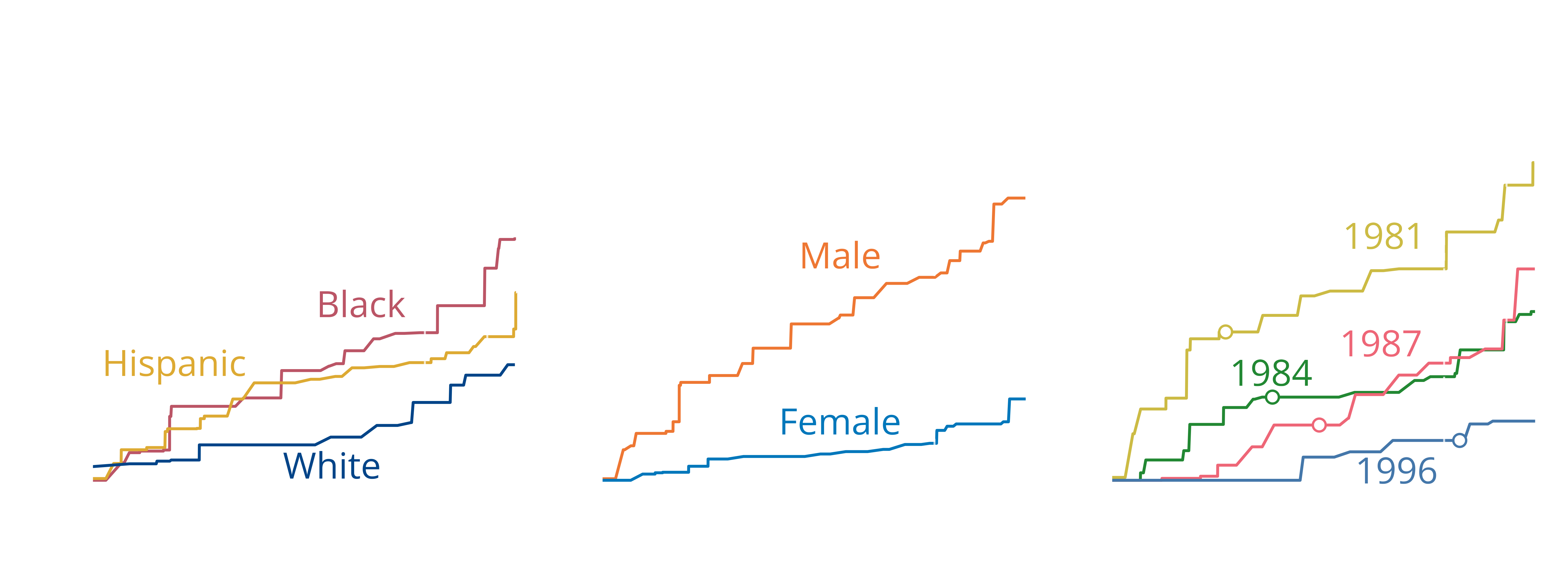
  • Adult increases are period effects
  • Large increases in new carriers since 2016

Continuity: Who is still carrying in 2020?
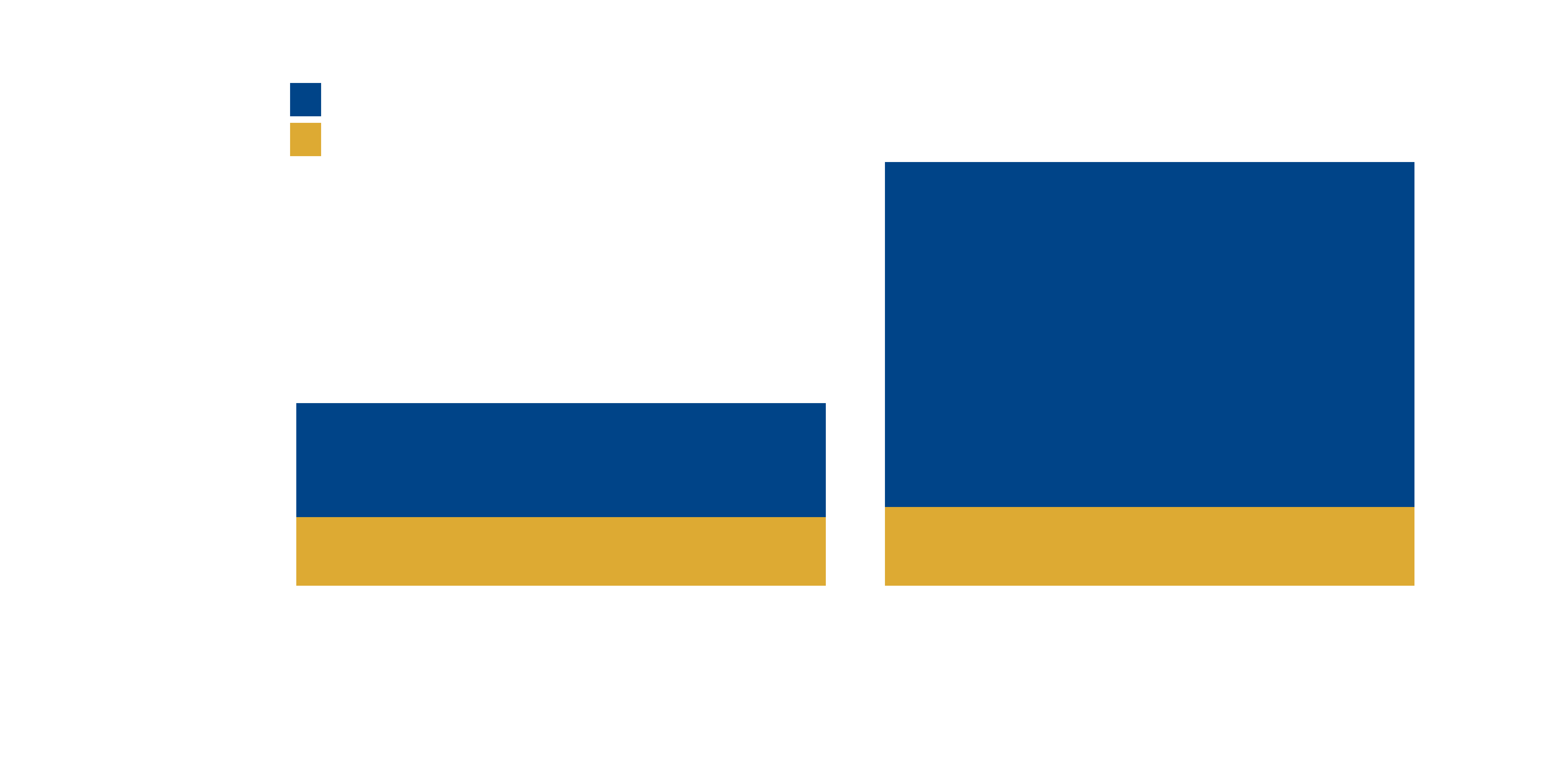
  • 60% of young carriers not carrying today
  • Young carriers no more likely to carry without permits

Exposure to gun violence and carrying
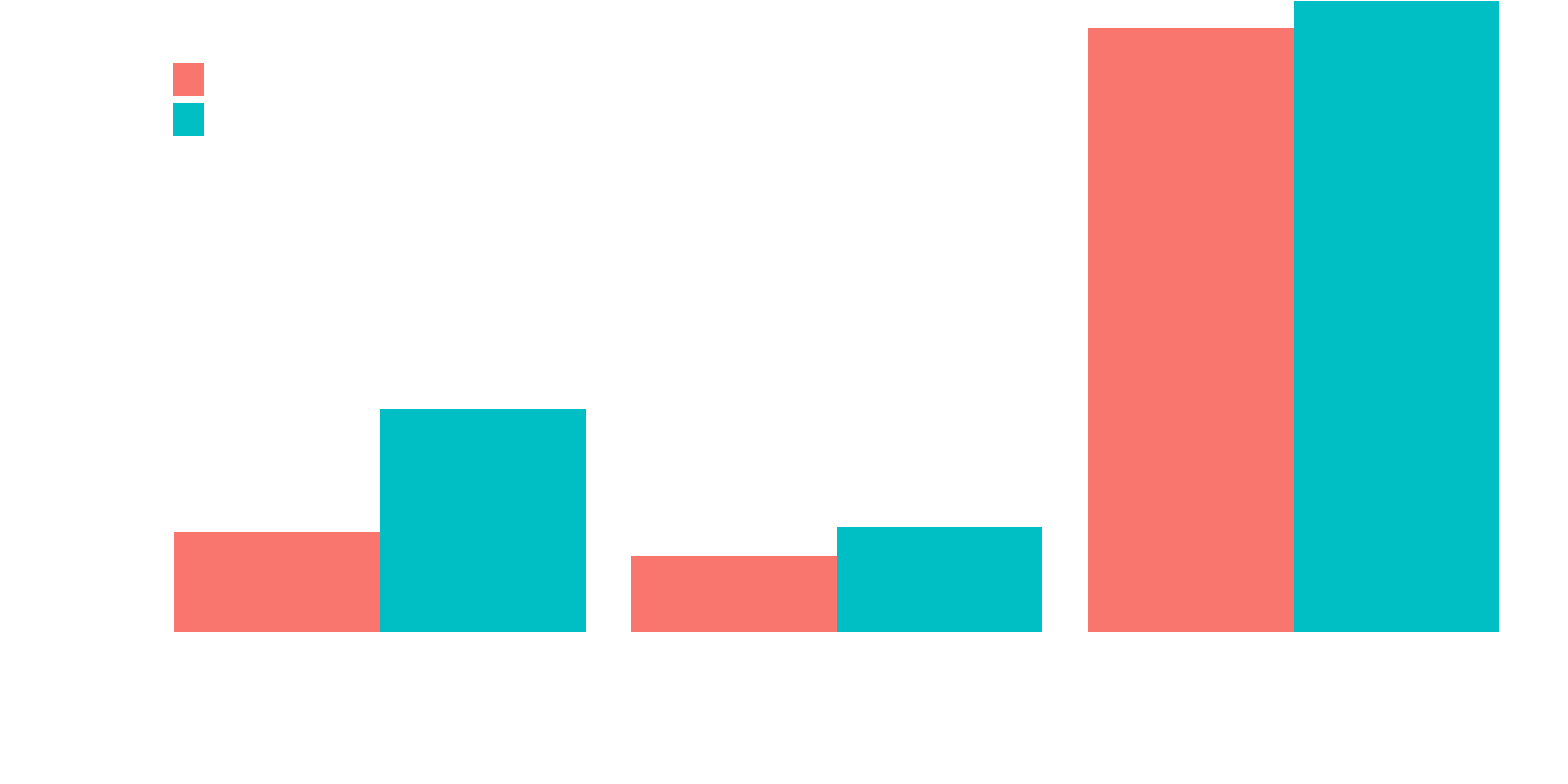
  • Exposed adolescents twice as likely to carry
  • Adult carry similar between those exposed and not